29 Food Facts That Sound Fake but Are True, From Honey That Never Spoils to Popcorn Kernels That Explode
NEW YORK, NY — Food trivia has a way of sounding invented until you check the science. Some of the strangest details about what we eat involve botany, chemistry, ancient trade, and a few ingredients that can be dangerous if handled the wrong way. Here are 29 food facts that are weird, surprising, and very real.
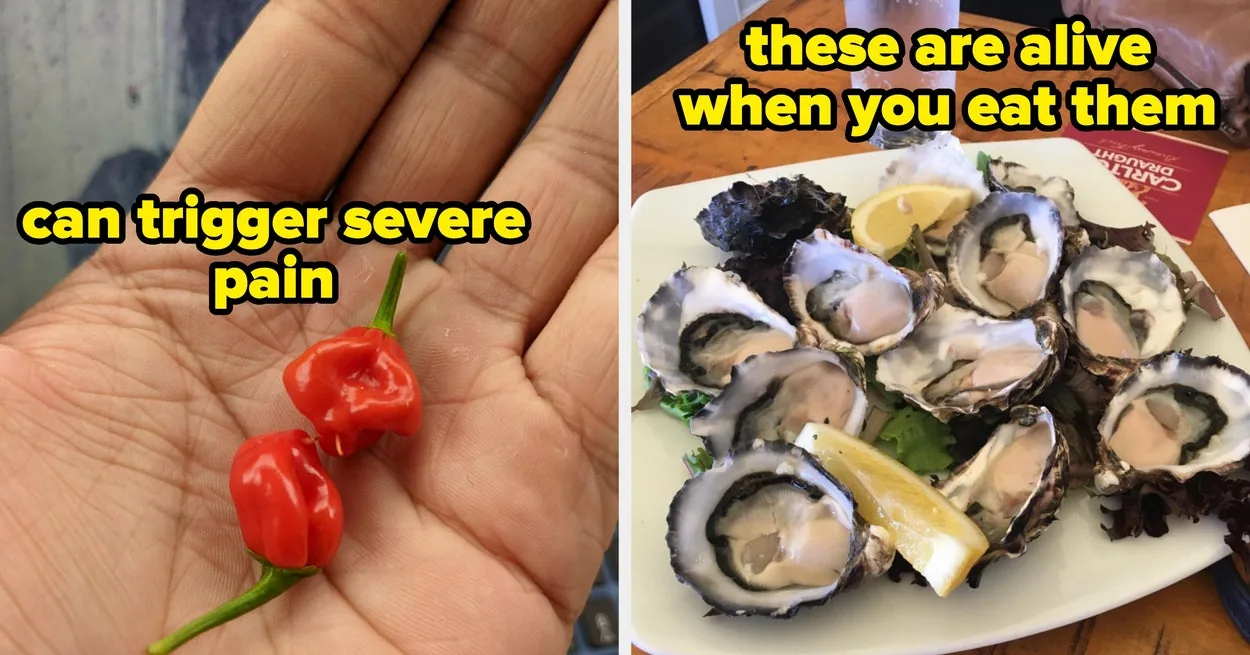
1. Oysters are often eaten alive or very freshly dead
Because oysters spoil so quickly, they are commonly served while still alive or only recently deceased. That odd detail is part of what makes them such a delicate seafood item. Their short shelf life is also why freshness matters so much when they are shucked and served. It is a reminder that some foods are as much about timing as taste.
2. Bananas are true berries, but strawberries are not
Botanically speaking, bananas qualify as true berries, while strawberries, raspberries, and blackberries do not. That flips everyday language on its head because the plant-science definition is based on how the fruit develops, not how it looks or tastes. It is one of the most famous examples of food classification being stranger than the grocery aisle suggests. Even simple fruit names can hide a lot of biology.
3. Ketchup was once sold as a medicine
In the 1830s, ketchup was marketed as a cure for indigestion, jaundice, and diarrhea. That claim says more about 19th-century sales tactics than it does about the condiment itself. Today, ketchup is known for burgers and fries, not for treating illness. Still, the fact that it once had a medical pitch makes it a memorable piece of food history.
4. Peanuts are not nuts at all
Peanuts grow underground and belong to the same plant family as beans and lentils, which means they are not true nuts. That underground growing habit is part of why they are classified so differently from almonds or walnuts. The name has stuck, but the botany tells another story. It is a tidy reminder that common food labels are often more casual than scientific.
5. Raw honey can last almost forever
Pure, raw honey does not spoil easily because its low moisture and acidic pH make it a bad place for bacteria to survive. That is why sealed honey can remain safe and usable for a remarkably long time. Its stability has made it famous as one of the most durable foods on earth. In the pantry, honey behaves more like a preservative than a fragile sweetener.
6. Nutmeg can become toxic in large amounts
Nutmeg is harmless in the small quantities most people cook with, but too much can cause serious problems. The compound myristicin can lead to hallucinations, nausea, rapid heartbeat, and other troubling symptoms. That makes this familiar baking spice a lot less innocent than it seems. Like several foods on this list, the danger comes from excess rather than everyday use.
7. Cashews grow from the bottom of a fruit
Cashews hang from the bottom of a cashew apple, and the part people eat is actually a seed, not a nut. Their unusual growth pattern makes them look almost upside down compared with most tree crops. The source fruit is one more reason cashews stand apart from other snack foods. Even something as familiar as a cashew has a surprisingly elaborate origin.
8. Cacao beans were once used as money
The ancient Mayan civilization valued cacao beans so highly that they used them as currency. That means chocolate’s key ingredient once had direct economic value, not just flavor value. The idea of paying with cacao shows how important it was in trade and daily life. Long before candy bars, cocoa already carried serious cultural weight.
9. Red bell peppers pack a vitamin C punch
Red bell peppers contain nearly three times as much vitamin C as an orange. That makes them a particularly strong source of a nutrient people often associate with citrus fruit. Their bright color is backed up by real nutritional muscle. It is a good example of how a common vegetable can quietly outshine better-known foods.
10. There is a real reason vanilla costs so much
Most vanilla flowers have to be pollinated by hand, and the beans then need months of curing after harvest. That labor-intensive process is a big part of why real vanilla is expensive. It is not just a flavoring; it is an ingredient that demands time, skill, and patience. By the time it reaches a bottle, a lot of work has already happened.
11. Popcorn pops because of trapped water
Each popcorn kernel holds a small amount of water inside a hard shell. When heated, pressure builds until the kernel explodes and turns inside out. The pop is a tiny physical event happening fast enough to be dramatic. It is one of the simplest kitchen transformations, but also one of the most satisfying to watch.
12. Coffee beans are not beans either
Coffee beans are actually the seeds, or pits, inside the coffee plant’s fruit, often called a coffee cherry. That means your morning brew begins as part of a fruit, not a bean pod. The terminology can be misleading, but the plant structure is straightforward. Coffee, like several foods here, has a name that hides its true origin.
13. Brazil nuts can contain natural radioactive elements
Brazil nuts are safe to eat, but they can naturally contain small amounts of radioactive elements such as radium. The levels are not a reason to panic, but they are an unusual fact about a very ordinary snack. It is one of those details that sounds impossible until you learn how plants absorb minerals from soil. Nature can be stranger than packaging ever suggests.
14. Pineapple can help tenderize meat
Pineapple contains bromelain, an enzyme that breaks down proteins. That is why it can be used as a meat tenderizer and why it can create a tingly sensation in your mouth when you eat it. The fruit is doing real chemical work as you bite into it. Sweet, sharp, and enzymatic all at once, pineapple is more active than it looks.
15. Real wasabi is rare, and most restaurant versions are substitutes
Authentic wasabi root is extremely rare and expensive. In many restaurants, what gets served is usually a horseradish-based substitute colored green. That gap between the real ingredient and the common imitation is much wider than many diners realize. It is a classic example of a food whose reputation far outpaces its availability.
16. Jell-O starts with animal collagen
Gelatin in Jell-O is made from collagen that has been extracted by boiling animal bones, skin, and connective tissue. The finished dessert looks playful and simple, but its origins are very different. That hidden process is part of what gives gelatin its signature wobble. Behind the bright colors is a product with a surprisingly layered backstory.
17. Casu Marzu is fermented with insect larvae
The traditional Sardinian cheese Casu Marzu is fermented with insect larvae, which help break it down into an extremely soft texture. The result is one of the most famous examples of a food people either find fascinating or deeply unsettling. It shows how local food traditions can evolve in ways that surprise outsiders. Not every cheese follows the same rules.
18. Fresh cranberries can bounce
Ripe cranberries can literally bounce because they contain tiny air pockets inside them. That unusual structure is one reason they are famously tested by dropping them. Their bounce is a real physical property, not just a fun marketing trick. It is one more case where fruit behaves like a tiny piece of engineered material.
19. Carolina Reapers can trigger intense physical reactions
Carolina Reapers are so loaded with capsaicin that they can cause intense pain, sweating, hiccups, vomiting, and even severe headaches in some people. They are not just hot; they can be overwhelming. The pepper’s reputation comes from chemistry that the body reads as alarm. For many eaters, the experience is less about flavor than endurance.
20. Cheddar is not always orange
Natural cheddar is usually pale yellow because of beta-carotene from grass, while orange cheddar gets its color from added annatto dye. That means the color many people associate with cheddar is often a choice, not a natural default. The flavor may be familiar either way, but the hue tells a different story. Color in cheese can be more cosmetic than culinary.
21. Carmine comes from crushed insects
The red food dye carmine is made from crushed cochineal insects and is used in foods, cosmetics, and other products. It is one of the most surprising ingredients on the list because the source is so far removed from the final bright red color. Many consumers never realize how it is produced. Food coloring can be a lot more literal than it sounds.
22. Rhubarb leaves are toxic
Rhubarb stalks are edible, but the leaves contain high levels of oxalic acid and other toxic compounds that can cause serious illness. That makes rhubarb a plant where one part is safe and another part is dangerous. It is a strong reminder not to assume the whole ingredient works the same way. In the kitchen, plant anatomy matters.
23. There is even a fear of peanut butter sticking to the roof of your mouth
Arachibutyrophobia is the name for the fear of peanut butter sticking to the roof of your mouth. It is a wonderfully specific term for an everyday sensation many people have felt at least once. The word itself sounds unusual enough to be fictional, but it is very real. Food facts are not always about ingredients; sometimes they are about human reactions to them.
24. The white strings on bananas have a job
The fibrous strands you see on a banana are called phloem bundles, and they help transport nutrients through the fruit as it develops. They may look like a nuisance, but they are part of the banana’s internal plumbing. That makes them more than just the stringy bits people peel away. Even a snack fruit has a built-in delivery system.
25. Raw vanilla takes patience from flower to finished bean
Vanilla is one of the most labor-intensive flavorings because the flowers usually need to be hand-pollinated and the beans take months to cure after harvest. That long timeline helps explain why pure vanilla remains expensive. It is a product shaped by careful human work at nearly every stage. A tiny amount in a recipe can represent a huge amount of effort.
26. Castoreum has been used as a vanilla flavoring
Castoreum is a secretion from beaver glands that has been used as a natural vanilla flavoring, though it is rare today. The ingredient sounds bizarre because it is so far outside the usual idea of dessert flavor. Its use is limited now, but it remains one of food history’s most unforgettable facts. Some flavor stories are stranger than the flavors themselves.
27. Kinds of berries do not always match common sense
The botanical meaning of berry is more technical than the everyday version most people use. That is why bananas fit the category while strawberries do not, and why fruit names can be misleading across the board. The science behind produce classification depends on structure, not supermarket habits. Once you know that, a lot of fruit labels start to seem surprisingly arbitrary.
28. Honey’s chemistry is what protects it
Honey lasts so long because its moisture level is low and its acidity is high enough to keep bacteria from thriving. That combination creates a naturally hostile environment for spoilage. It is one of the clearest examples of food chemistry working in a product people eat every day. The sweetness is obvious; the preservation power is the hidden part.
29. Some of the weirdest food facts are the most ordinary
From popcorn and pineapple to coffee and cranberries, many familiar foods have hidden mechanics, unexpected origins, or surprising risks. The point of a list like this is that the strange details are not fringe trivia; they are built into things people already use every day. Once you know them, the grocery store looks a little more interesting. The everyday menu turns out to be full of small surprises.