7 Strange Details About Dudleytown, Connecticut, and the Haunted-Lore Claims That Keep Drawing Curious Visitors
CORNWALL, CT — Dudleytown, a long-abandoned settlement in northwestern Connecticut, still pulls in ghost-story seekers despite being closed to outsiders and marked with no-trespassing warnings. The place has inspired decades of folklore about curses, shadowy figures and unexplained deaths, while its owners insist the supernatural claims are simply false. One writer says a photograph he took there even seemed to capture a face in the trees, turning a historical visit into a paranormal obsession.
1. A Ghost Town Hidden Behind Private Land
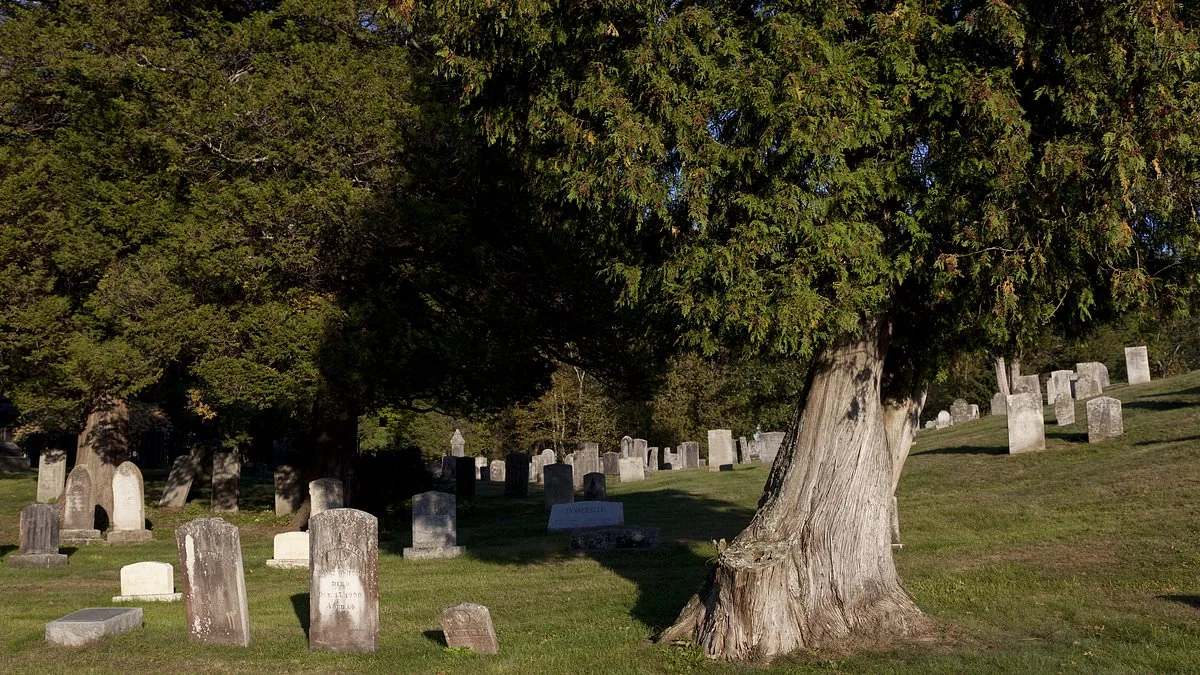
Dudleytown sits on private property in Connecticut’s Dark Entry Forest, where dirt roads and warning signs help keep most visitors out. The abandoned settlement is often described as one of the country’s most notorious haunted locations, and even actor Dan Aykroyd once reportedly called it “the most haunted place on Earth.” Today, the landscape is mostly woods, ruins and silence, which only adds to the site’s reputation among believers and thrill-seekers.
2. The Photograph That Sparked New Belief
Writer John Kachuba said he visited the site first as a history enthusiast, taking multiple photographs of the remains. He later noticed what he described as an anomaly in one image, something that looked like a human face in the forest. Kachuba said he took the photo to Ed and Lorraine Warren, the paranormal investigators later tied to The Conjuring films, and claimed they told him it showed a spirit. The photo has since been lost.
3. A Tiny Settlement That Slowly Went Away
Long before the ghost stories, Dudleytown was a small, difficult place to live. Reports say it never grew beyond about 26 families, and residents depended on nearby Cornwall for stores and church services while trying to farm rocky land. The village faded gradually in the late 1800s and early 1900s as farming became harder, the local iron industry declined and families moved west for better opportunities.
4. The Curse Legend Traced Back to England
One of the darkest myths claims Dudleytown was shadowed by a family curse that began centuries earlier in England. Believers point to Edmund Dudley, executed for treason in 1510, and his son John Dudley, Duke of Northumberland, who was beheaded in 1553 after trying to place Lady Jane Grey on the throne. Local historians, however, say they have found no family link between those English nobles and the Connecticut settlers, weakening the legend’s foundation.
5. Deaths and Misfortunes Built the Reputation
Over the years, followers of the legend have gathered a long list of tragedies tied to the settlement. Some accounts point to deaths during the French and Indian War, disease affecting the Carter family and the 1804 lightning death of Sarah Swift, wife of Revolutionary War veteran General Herman Swift. Historians confirm the lightning strike, but say it was the kind of accident that happened often before lightning rods became common.
6. One Legend Says a Family Vanished Overnight
By the nineteenth century, the folklore had grown even more dramatic. One story says John Brophy’s wife died of tuberculosis, his children disappeared, his home burned down and Brophy himself vanished soon after. Another tale centers on Dr. William C. Clarke, whose wife allegedly suffered a breakdown after he returned from a medical emergency. Local historians dispute the supernatural version and say no residents or vacationers from the twentieth century reported haunted disturbances while living, skiing or camping there.
7. Why the Forest Still Draws Attention Today
In 1924, Clarke and other landowners formed Dark Entry Forest, Inc., bought more of the former settlement and replanted thousands of trees for forestry and wildlife conservation. Today, little remains besides stone walls, cellar holes and narrow paths overtaken by forest growth. The owners say vandalism, littering, fires and trespassing forced them to tighten access, yet visitors still report strange noises, moving shadows and the unsettling feeling of being watched.
Wrap-Up: History, Folklore and a Lost Photo
Kachuba says the fascination comes from a universal question: what, if anything, comes after death. Whether Dudleytown is read as a cautionary tale of rural decline or a genuine paranormal landmark, its mix of ruins, disputed legends and one vanished photograph keeps the story alive. Kachuba continues researching paranormal history, and his nonfiction book Shapeshifters: A History is due in paperback in September.